
Back to blog

Figma Eyes IPO – Should Adobe Be Concerned?

As part of the initial public offerings, another promising company appears on the horizon. Figma, an innovative design design platform, is gearing up for an IPO that could generate up to $1 billion in revenue. The projected share price is in the range of $25 to $28, which could bring the final value up to $16 billion. [1] Figma is thus preparing for one of the biggest steps in its history, which will subsequently be available to retail investors. What is its advantage over the competition?

Figma Eyes IPO – Should Adobe Be Concerned?

How are the fundamentals?

In general, investors considering buying a company first of all evaluate its intrinsic value, based on key financial indicators. In connection with this, companies that are just entering the stock exchange often do not yet achieve profitability and seek the attention of investors primarily with a business plan for the future. But Figma is writing a different story The company is already making a profit with its performance, specifically for the last quarter, the estimate is in the range of USD 9 to 12 million, with revenues between USD 247 million and USD 250 million. This means that the company will not have to solve existential problems with the proceeds from the IPO, and with the next steps, it will be able to invest the acquired capital in expansion, an already indispensable tool for designers and graphic designers around the world. [2]

Figma and blockchain

Ambitious plans for the future also carry a piece of the world of cryptocurrencies. Figma has authorized the issuance of the so-called "blockchain common stock" in the form of tokens, which shows the company's determination to diversify using the latest technologies. However, a specific date for their release has not yet been set.

In addition, the company has also used the digital world of cryptocurrencies in its own investments. In July, it enriched its capital structure with an unspecified stablecoin, as well as an ETF tied to Bitcoin itself.

When financial capital alone is not enough

Figma is very aware of the complexity needed to achieve long-term success, as evidenced by the development of the team. Mike Krieger, co-founder of Instagram and current product director of the AI division at Anthropic, and Luis von Ahn, co-founder and CEO of Duolingo, have joined the board of directors. The duo thus brings unquestionable technological knowledge to the company, which Figme will definitely need on its journey.

Conclusion

After a wider downturn with the IPO, lasting from 2021, Figma will compete for its place on the NYSE. The potential for investors is hidden in the company's financial results, innovations and, of course, in the demand for effective tools for teamwork and design. In conclusion, it can also be stated that in the end, Figma is directed in the right direction, but as is customary in the capital market, the decisive factor will be consistency of progress and the ability to keep up, or ideally outperform the competition. Will Figma make it?

[1,2] Forward-looking statements represent assumptions and current expectations that may not be accurate or are based on the current economic environment, which is subject to change. These statements do not guarantee future performance. Forward-looking statements involve risk and uncertainty by their nature because they relate to future events and circumstances that cannot be foreseen, and actual developments and results may differ materially from those expressed or implied in any forward-looking statements.

Warning! This marketing material is not and should not be construed as investment advice. Data relating to the past are not a guarantee of future returns. Investing in foreign currency can affect returns due to fluctuations. All securities trades can lead to both profits and losses. Forward-looking statements represent assumptions and current expectations that may not be accurate or are based on the current economic environment, which is subject to change. These statements do not guarantee future performance. InvestingFox is a trademark of CAPITAL MARKETS, o.c.p., a.s., regulated by the National Bank of Slovakia.

Sources:

https://www.sec.gov/Archives/edgar/data/1579878/000162828025035381/figma-sx1a.htm

https://www.cnbc.com/2023/12/18/adobe-and-figma-call-off-20-billion-merger.html

https://www.cnbc.com/2025/06/05/stablecoin-issuer-circle-soars-in-nyse-debut-after-pricing-ipo-above-expected-range.html

https://www.cnbc.com/2025/07/01/figma-fig-files-for-ipo-as-tech-debuts-gain-steam.html

InvestingFox is a trademark of CAPITAL MARKETS, o.c.p., a.s., with its registered office at Slávičie údolie 106, Bratislava – Staré Mesto district, 811 02. The company is registered in the Commercial Register of the Municipal Court Bratislava III, Section: Sa, File No.: 4295/B, ID No.: 36 853 054, VAT No.: 2022505419.

CAPITAL MARKETS, o.c.p., a.s. is a securities dealer pursuant to Section 55(1) of Act No. 566/2001 Coll. on Securities and Investment Services and on Amendments to Certain Acts, as amended (hereinafter the “Securities Act”). On October 30, 2007, CAPITAL MARKETS, o.c.p., a.s. was granted, by Decision No. OPK-2297/2007 of the National Bank of Slovakia -PLP, a license to provide investment services pursuant to Section 54(2) in conjunction with Sections 59(2) and (3) of the Securities Act, which was extended in accordance with the provisions of the Securities Act by Decision No. OPK-1830/2008-PLP dated April 21, 2008, Decision No. OPK-11601-1/2008 dated January 28, 2009, Decision No. ODT-5059-3/2012 dated July 23, 2012, and Decision No. ODT-9332/2014-1 dated October 21, 2014.

Read more

Lamb Weston Surprises the Stock Market: Profit Falls 55%, Shares Jump 7.5%

Lamb Weston Surprises the Stock Market: Profit Falls 55%, Shares Jump 7.5%

Frozen french fry manufacturer Lamb Weston announced its results on October 6, 2026, revealing a striking discrepancy between reported profits and the stock market’s reaction. Net income plummeted 55% year-over-year, yet investors responded by buying shares. The company exceeded expectations and raised its full-year outlook. Sales growth in North America and cost-cutting measures suggest that changes in the company’s operations are beginning to pay off. The question remains, however, whether this progress will be enough to resolve problems overseas. [1]

TD SYNNEX Far Exceeded Expectations: Revenue Jumped 38%, but Shares Fell After the Earnings Report

TD SYNNEX Far Exceeded Expectations: Revenue Jumped 38%, but Shares Fell After the Earnings Report

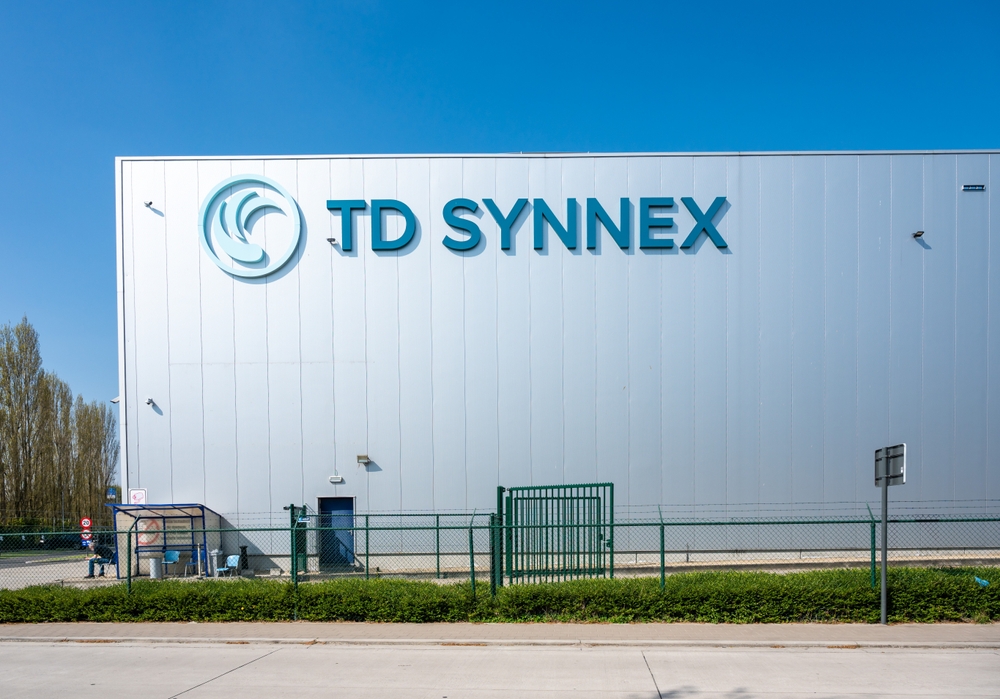
TD SYNNEX reported results that, at first glance, look very strong and confirm that the company is benefiting from growing demand for technology infrastructure. Upon closer inspection, however, the picture is not entirely clear-cut. Behind the record numbers lies a combination of rapid expansion, shifting margins, and significant cash flow fluctuations, which investors have begun to view with far greater sensitivity than revenue growth alone. It is precisely the difference between what the income statement shows and what is happening beneath the surface that makes TD SYNNEX’s latest quarter a much more interesting story than the headline numbers alone would suggest.

AutoZone Surprises Wall Street with Earnings: EPS Jumps 15%, but Weaker Sales Reveal Pressure on Customers

AutoZone Surprises Wall Street with Earnings: EPS Jumps 15%, but Weaker Sales Reveal Pressure on Customers

AutoZone closed fiscal year 2026 with results that appear very strong at first glance. Fourth-quarter revenue rose 5.6% year-over-year to $6.59 billion, net income increased to $931.6 million, and earnings per share reached $56.05, approximately 15% higher than a year ago and above Wall Street expectations. Beneath the surface, however, a weakness remains. Comparable sales growth fell short of forecasts, and American DIY car repairers continue to curb their purchases.1

Oracle Gains Momentum in AI: Cloud Revenue Grows 121%, Contracted Order Volume Reaches $664 Billion

Oracle Gains Momentum in AI: Cloud Revenue Grows 121%, Contracted Order Volume Reaches $664 Billion

Oracle kicked off the new fiscal year with results that once again confirmed that its transformation toward the cloud and artificial intelligence is gaining momentum. The company exceeded market expectations and demonstrated significant acceleration in the areas where it has directed the bulk of its investments in recent years. Behind the strong numbers, however, lies a question that will become increasingly important for investors. Oracle is growing rapidly, but the path to further expansion will be extremely costly. [1]