
Back to blog

Elon Musk and Tesla: The $1 Trillion Compensation Plan

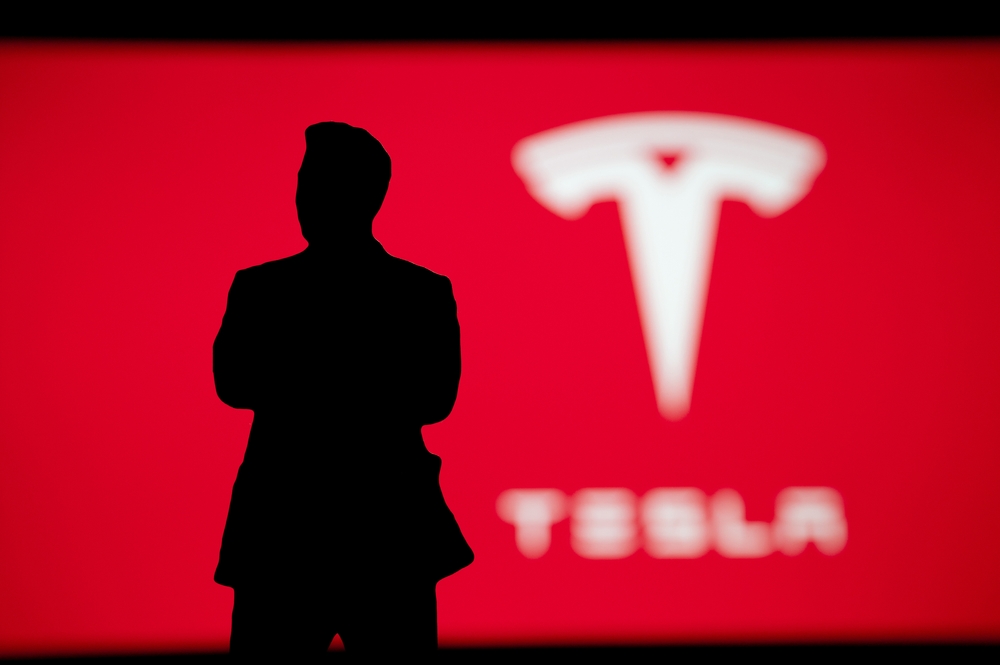
On Thursday evening, at Tesla’s headquarters in Austin, excitement and tension filled the air. Tesla shareholders, at their annual general meeting, approved the largest compensation package in corporate history – nearly $1 trillion for Elon Musk. The measure, which sparked heated debate when introduced in September 2025, was ultimately passed with 75% shareholder support. But what exactly must Musk achieve to receive it?

Elon Musk and Tesla: The $1 Trillion Compensation Plan
Astronomical Targets

The approved plan divides Musk’s potential reward into 12 tranches of stock awards, which are activated only if clearly defined market and operational milestones are met. In the end, if Musk fulfills all the targets, his ownership stake in Tesla would increase from the current 13% to 25%. In total, that represents 423 million new shares. The first tranche will vest once Tesla’s market capitalization reaches $2 trillion (up from today’s $1.54 trillion). Each subsequent milestone increases by $500 billion, with the final target set at an astonishing $8.5 trillion. On the operational side, the goals are no less ambitious: annual profit of up to $400 billion, delivery of 20 million vehicles, 1 million active robotaxis, and 1 million Optimus humanoid robots. It’s worth noting that, according to Tesla’s September statement, the company had delivered around 8 million vehicles to date.

The AI Empire

Musk has long claimed that Tesla is more of an AI company than a car manufacturer. His vision is clear – to integrate autonomous driving (FSD), robotaxi services, and humanoid robots into a single ecosystem where data and artificial intelligence serve as the company’s main competitive edge. Currently, Tesla offers its Full Self-Driving Supervised system, which still requires driver oversight. Musk has repeatedly promised full autonomy, but no specific date has been given yet. The Optimus robot project remains in the experimental phase as well. Nevertheless, Musk has declared that robots will “end poverty” and become a business bigger than smartphones.

The Legal Shadow of the Past

Not everything is idyllic. Musk’s previous compensation plan from 2018 was struck down in January 2024 by a Delaware court due to conflicts of interest. While Musk appealed the decision, the new 2025 plan is built on a clean, independent structure with no links to previous conditions. Interestingly, despite opposition from major proxy advisory firms Glass Lewis and ISS, which recommended voting against the proposal, shareholders approved it. The vote sends a clear message: investors want Musk to remain strongly tied to Tesla, even at the cost of unique risks — especially since the plan includes no restrictions on Musk’s political activities or minimum time commitment to the company. That worries some shareholders, particularly after an NBER study showed that Tesla’s U.S. sales could have been 67–83% higher if Musk were not such a polarizing public figure.

Forward-looking statements represent assumptions and current expectations that may not be accurate or are based on the current economic environment, which is subject to change. These statements are not guarantees of future performance. Due to their nature, forward-looking statements involve risk and uncertainty as they relate to future events and circumstances that cannot be predicted, and actual developments and results may differ materially from those expressed or implied.

Disclaimer! This marketing material is not, and must not be construed as, investment advice. Past performance is not indicative of future results. Investments denominated in foreign currency may affect returns due to exchange rate fluctuations. All securities trading can result in both profits and losses. Forward-looking statements represent assumptions and current expectations that may not be accurate or based on the current economic environment, which is subject to change. These statements do not guarantee future performance. InvestingFox is a trading brand of CAPITAL MARKETS, o.c.p., a.s., regulated by the National Bank of Slovakia.

Sources:

https://www.cnbc.com/2025/11/06/tesla-shareholders-musk-pay.html
https://www.sec.gov/ix?doc=/Archives/edgar/data/0001318605/000110465925087598/tm252289-4_pre14a.htm
https://www.reuters.com/legal/transactional/musks-record-tesla-package-will-pay-him-tens-billions-even-if-he-misses-most-2025-10-09/
https://www.nber.org/papers/w34413

 

InvestingFox is a trademark of CAPITAL MARKETS, o.c.p., a.s., with its registered office at Slávičie údolie 106, Bratislava – Staré Mesto district, 811 02. The company is registered in the Commercial Register of the Municipal Court Bratislava III, Section: Sa, File No.: 4295/B, ID No.: 36 853 054, VAT No.: 2022505419.

CAPITAL MARKETS, o.c.p., a.s. is a securities dealer pursuant to Section 55(1) of Act No. 566/2001 Coll. on Securities and Investment Services and on Amendments to Certain Acts, as amended (hereinafter the “Securities Act”). On October 30, 2007, CAPITAL MARKETS, o.c.p., a.s. was granted, by Decision No. OPK-2297/2007 of the National Bank of Slovakia -PLP, a license to provide investment services pursuant to Section 54(2) in conjunction with Sections 59(2) and (3) of the Securities Act, which was extended in accordance with the provisions of the Securities Act by Decision No. OPK-1830/2008-PLP dated April 21, 2008, Decision No. OPK-11601-1/2008 dated January 28, 2009, Decision No. ODT-5059-3/2012 dated July 23, 2012, and Decision No. ODT-9332/2014-1 dated October 21, 2014.

Read more

TD SYNNEX Far Exceeded Expectations: Revenue Jumped 38%, but Shares Fell After the Earnings Report

TD SYNNEX Far Exceeded Expectations: Revenue Jumped 38%, but Shares Fell After the Earnings Report

TD SYNNEX reported results that, at first glance, look very strong and confirm that the company is benefiting from growing demand for technology infrastructure. Upon closer inspection, however, the picture is not entirely clear-cut. Behind the record numbers lies a combination of rapid expansion, shifting margins, and significant cash flow fluctuations, which investors have begun to view with far greater sensitivity than revenue growth alone. It is precisely the difference between what the income statement shows and what is happening beneath the surface that makes TD SYNNEX’s latest quarter a much more interesting story than the headline numbers alone would suggest.

AutoZone Surprises Wall Street with Earnings: EPS Jumps 15%, but Weaker Sales Reveal Pressure on Customers

AutoZone Surprises Wall Street with Earnings: EPS Jumps 15%, but Weaker Sales Reveal Pressure on Customers

AutoZone closed fiscal year 2026 with results that appear very strong at first glance. Fourth-quarter revenue rose 5.6% year-over-year to $6.59 billion, net income increased to $931.6 million, and earnings per share reached $56.05, approximately 15% higher than a year ago and above Wall Street expectations. Beneath the surface, however, a weakness remains. Comparable sales growth fell short of forecasts, and American DIY car repairers continue to curb their purchases.1

Oracle Gains Momentum in AI: Cloud Revenue Grows 121%, Contracted Order Volume Reaches $664 Billion

Oracle Gains Momentum in AI: Cloud Revenue Grows 121%, Contracted Order Volume Reaches $664 Billion

Oracle kicked off the new fiscal year with results that once again confirmed that its transformation toward the cloud and artificial intelligence is gaining momentum. The company exceeded market expectations and demonstrated significant acceleration in the areas where it has directed the bulk of its investments in recent years. Behind the strong numbers, however, lies a question that will become increasingly important for investors. Oracle is growing rapidly, but the path to further expansion will be extremely costly. [1]

Casey’s Beat Expectations, but Shares Plummeted: Strong Earnings Overshadowed by a Slowdown in Sales

Casey’s Beat Expectations, but Shares Plummeted: Strong Earnings Overshadowed by a Slowdown in Sales

Casey’s General Stores kicked off fiscal year 2027 with results that, at first glance, appear very impressive. However, behind the strong numbers lies a story that is significantly more complex and raises more questions than clear answers for investors. The market isn’t just looking at how much the company earned, but also at how it achieved this result and whether it will be able to maintain a similar pace in the coming quarters.