 English

 Slovak
 Czech
Czech
 Hungarian
 Italian
 Polish





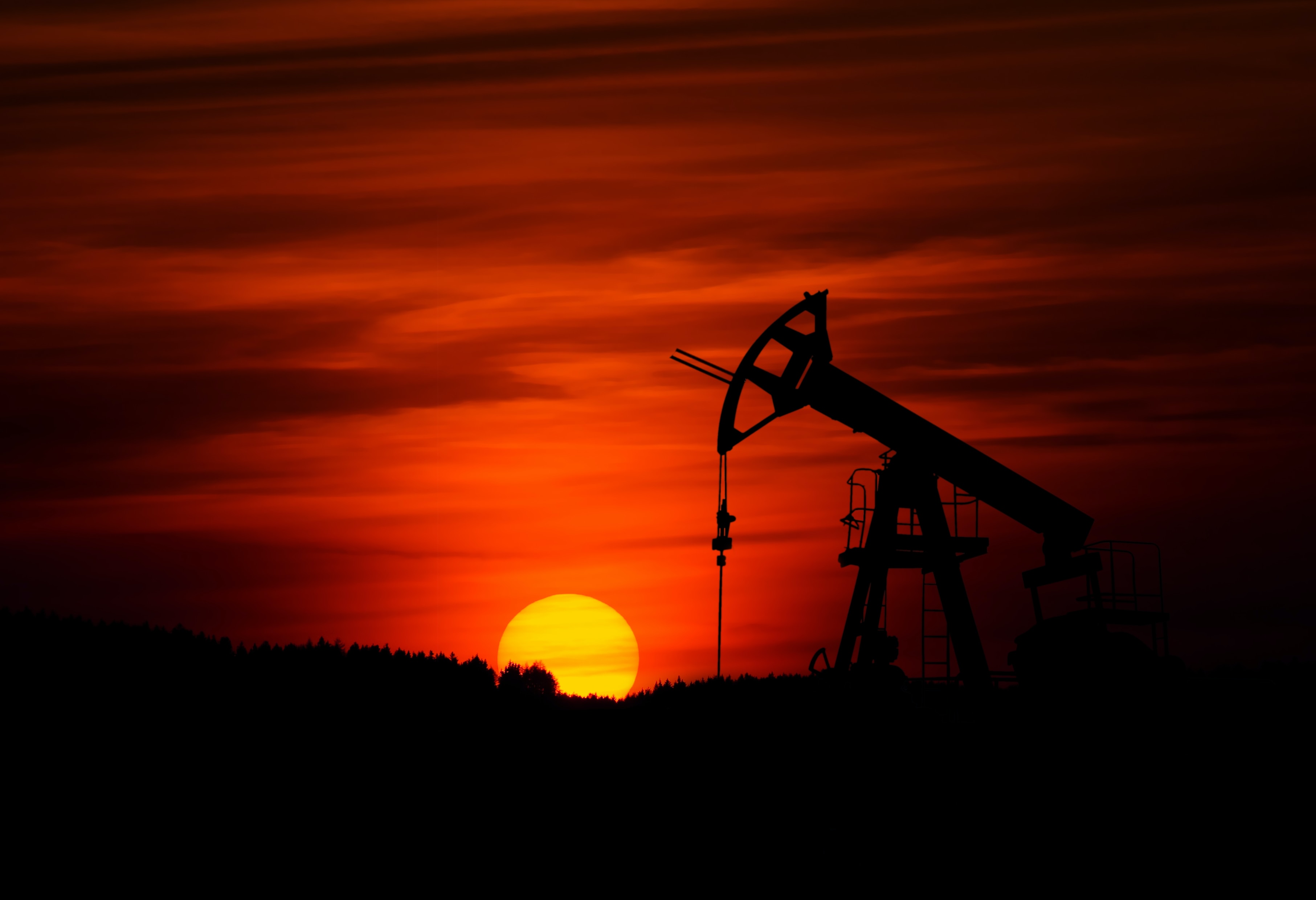

WTI performance over 5 years. Source: tradingview.com
Markets are reacting to Israel's ground operation in the Gaza Strip.
Nervousness is evident in the global oil market. Investors are closely following developments in the conflict between Israel and the terrorist organization Hamas, which is still holding more than 200 Israeli hostages in the Gaza Strip. Israel has already launched a long-awaited ground operation in Gaza, according to Prime Minister Benjamin Netanyahu, causing the price of oil to rise by less than three percent.
Brent crude oil futures are trading around the $90 per barrel mark, while US WTI crude is only five dollars cheaper. Black gold thus broke a several-day series of price reductions, and its price will most likely move upwards in the coming days or weeks. It is currently at the same levels as at the end of the summer holidays. However, it is not excluded that it will soon approach the $100 mark. [1] Everything will depend on further developments in Israel and Gaza.
It should be noted that the conflict in the Middle East has had practically no impact on the supply of oil to the world market. The current upward movement of the price can thus be entirely attributed to the growing demand, especially from the ranks of speculators. However, one cannot rely on the fact that the current situation will last, and that eventually some important exporters will not stop exporting oil to the world. Experts talk mainly about Iran, which is an ally of Hamas.
In the medium-term outlook, the prevailing market consensus is that Brent crude could average around $95 per barrel over the next year. [2] Such a price level is predicted, for example, by the analytical team of the investment bank Goldman Sachs. Behind the slight increase in price (compared to the current situation), he sees on the one hand a drop in oil supplies from Iran, and on the other hand a certain economic recovery in the world.
Inflation will be a very key factor for the development of demand in the global oil market. If the general expectation that inflation will return to the target values of around two percent in annual terms in the course of next year is fulfilled, we can expect a gradual revival of demand in the global economy, and therefore also for oil. On the contrary, any unexpected further inflationary shock would most likely slow down the economic recovery and thus the demand for oil. Despite the fact that major global central banks would again be forced to raise interest rates to dampen inflationary pressures.
However, experts generally warn that there will be quite a lot of uncertainty in the global oil market for the rest of this year and next year. And this is mainly because of the still ongoing war conflict between Russia and Ukraine, and also because of the already mentioned tension in the Middle East. Both conflicts can end at any time, but they can also last for a time that is difficult to estimate. However, if there is any surprise, then it will be more of a positive surprise, as the markets seem to have already calculated the pessimistic variants into their expectations.
The current situation in the Middle East brings to mind the events of 50 years ago, when as a result of the so-called Yom Kippur War (in which Israel was also attacked) there was a rapid increase in the price of oil, and the world was thus faced with the first oil shock. Such a development is unlikely to be repeated today, as the global economy is no longer as dependent on oil (in terms of GDP unit) as it was in the first half of the 1970s.
* Past performance is no guarantee of future results.
[1,2] Forward-looking statements are based on assumptions and current expectations, which may be inaccurate, or the current economic environment, which may change. Such statements are not guarantees of future performance. They involve risks and other uncertainties that are difficult to predict. Results may differ materially from those expressed or implied by any forward-looking statements.