 Polish

 English
 Slovak
 Czech
Czech
 Hungarian
 Italian
 Slovenian





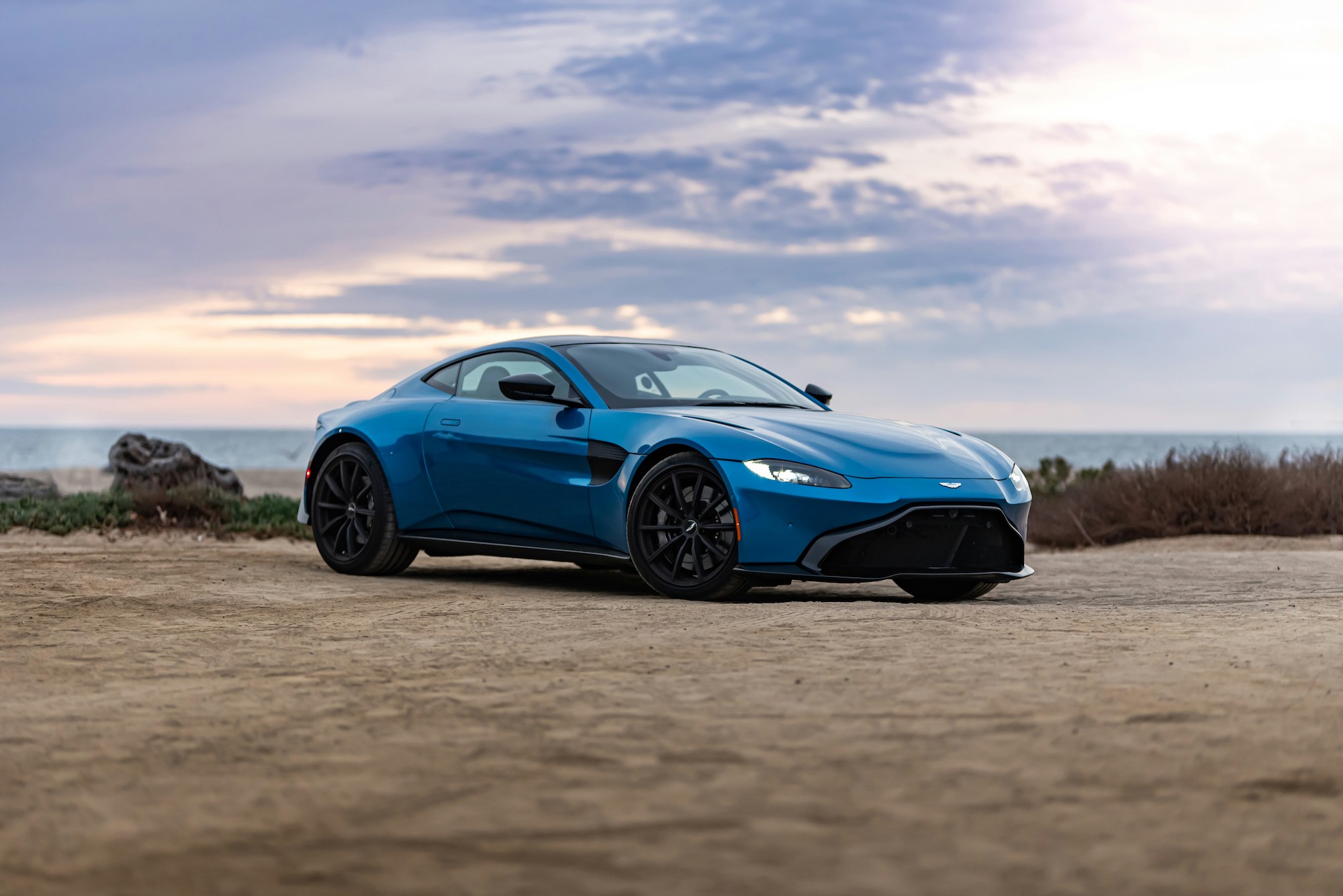
The value of the company's shares fell by 7% after the results were announced, plummeting to 134.70 GBP during the following trading day, a drop of almost a 22 % since the beginning of April.[1] The company's adjusted pre-tax loss almost doubled to 110.5 million GBP, while revenue fell by 10% to 267.7 million GBP. Net debt rose by 20% to 1.04 billion GBP.[2]*

Analysis of the causes
The carmaker's loss can be attributed not only to the announced drop in car production and more past expenses, but also to other factors. One is the high debt, which has long been a deterrent to investors and is reflected in the sharp fall in Aston Martin's share price since it was listed on the London Stock Exchange 6 years ago. Hargreaves Lansdown's head of finance and markets, Susannah Streeter, told CNBC that another problem is high interest rates. As the cost of financing vehicles rises, demand for them is falling, even among wealthier customers who choose vehicles in the high price ranges.[1]
A new face in senior management
The appointment of a new CEO, Adrian Hallmark, who became the fourth in line, has attracted a lot of attention. His arrival represents a significant change as he moves directly from a rival German car manufacturer. Indeed, he previously held the position of CEO at Bentley, but has now accepted the challenge of taking the lead role at the famous British car giant.[2]
Hope for new models
The company is betting on the success of four new models planned for 2024 to deliver significant growth in the coming months. Lawrence Stroll, the company's chairman, said the first-quarter performance reflects this transition period after the end of production of current models and ahead of the launch of new vehicles such as the Vantage, the upgraded DBX707 and the upcoming V12 flagship model. Stroll also highlighted significant progress in strengthening the company's financial position, which includes the successful refinancing of secured bonds on favourable terms.[3]
Electrification shift
In important news for investors, the UK company's decision to postpone the switch to electric motors came at a time when the UK government has pushed back the deadline for a ban on the sale of high-emission petrol and diesel cars to 2035. Aston Martin has confirmed that they will continue to intermediate internal combustion engine vehicles for as long as legally possible. They plan to launch their first electric vehicle in 2026.[4] With the current situation in Britain, which is struggling with a shortage of qualified mechanics to repair electric cars, resulting in nearly new vehicles ending up in landfill sites, this decision is hardly surprising given the current situation in the UK.
Still an interesting opportunity for investors
Although Aston Martin faced challenges in the first quarter of 2024 in the form of falling share values and large losses, the company remains resolute, banking on the success of four new models and staying committed to the production of internal combustion engine vehicles. The new CEO, Adrian Hallmark, may bring a new direction, which is a great signal to investors who see the potential of this company in the automotive industry, whose share value has been essentially in the red since going public. Let's see if with the recent news and a new face in the management, the company's stock market value will finally turn to green numbers.
David Matulay, InvestingFox
[1] Forward-looking statements are assumptions and current expectations that may not be accurate or are based on the current economic environment, which may change.
These statements are not guarantees of future performance. Forward-looking statements, by their nature, involve risk and uncertainty because they relate to future events and circumstances that cannot be predicted and actual developments and results may differ materially from those expressed or implied by any forward-looking statements.
* Data relating to the past is not a guarantee of future returns.
Disclaimer! This marketing material is not and should not be construed as investment advice. Past performance data is not a guarantee of future returns. Investing in foreign currency may affect returns due to fluctuations. All securities transactions may result in both gains and losses. Forward-looking statements represent assumptions and current expectations that may not be accurate or are based on the current economic environment, which may change. These statements are not guarantees of future performance. InvestingFox is a trademark of CAPITAL MARKETS, o.c.p., a.s. regulated by the National Bank of Slovakia.
[1] https://www.cnbc.com/2024/05/01/aston-martins-losses-nearly-double-on-lower-sales-but-carmaker-projects-growth-from-new-models.html
[2] https://auto.hindustantimes.com/auto/news/aston-martin-shares-sink-as-losses-accelerate-41714617079281.html
[3] https://www.cnbc.com/2024/05/01/aston-martins-losses-nearly-double-on-lower-sales-but-carmaker-projects-growth-from-new-models.html
[4] https://www.barrons.com/news/aston-martin-shares-sink-as-losses-accelerate-80235ab7
[1] https://finance.yahoo.com/quote/AML.L/
[2] https://www.cnbc.com/2024/05/01/aston-martins-losses-nearly-double-on-lower-sales-but-carmaker-projects-growth-from-new-models.html